Faster experiments, less damage: using maths to transform X-ray spectro-microscopy
06 Nov 2026

Researchers from the Ada Lovelace Centre have demonstrated a new data driven approach can reduce data collection requirements in X-ray spectro-microscopy by more than an order of magnitude while retaining scientific accuracy.
Published in the Journal of Synchrotron Radiation, the work shows how intelligent sampling strategies can reconstruct complete spectro-microscopy datasets from as little as 4-6% of the measurements normally required. In some cases, useful results were obtained with sampling rates as low as 2%.
The research addresses one of the major challenges in synchrotron science: balancing the need for detailed measurements against limited beamtime and the risk of radiation damage to sensitive samples.
The challenge
X-ray spectro-microscopy combines spectroscopy and microscopy to reveal both the chemical composition of a material and how that chemistry varies across a sample. It is widely used in areas including battery research, catalysis, environmental science and biological systems.
However, obtaining these datasets is expensive in experimental time. A conventional experiment requires complete raster scans of a sample at many different X-ray energies, potentially producing hundreds of thousands of individual spectra. For many experiments, acquisition time and radiation damage become limiting factors.
The question facing researchers was simple: do we really need to measure every point?
Letting the data guide the experiment
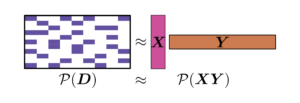
The team recognised that spectro-microscopy datasets are highly structured. Although experiments generate vast amounts of data, the number of underlying chemical states is often relatively small. This means much of the information is redundant or can be represented, in principle, from a carefully selected subset of measurements.
Building on advances in matrix completion and numerical linear algebra, the researchers developed new data-driven sampling strategies that identify the most informative measurements and prioritise them during acquisition. Instead of scanning every position at every energy, the algorithms determine where information is most valuable and concentrate measurements there.
A key innovation was the use of statistical leverage scores and CUR matrix decompositions to guide experiment design. These methods estimate which energies and spatial regions contain the greatest scientific value, enabling intelligent subsampling while preserving the information required for downstream analysis.
Results: up to twenty-fold reductions in measurements
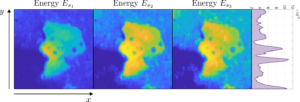
The methods were tested using data collected on the I14 Hard X-ray Nanoprobe beamline at Diamond Light Source. Across multiple datasets, the new approaches consistently outperformed a previously tested random subsampling method by a factor of 4 and x20 typically over conventional scanning.
The researchers found that:
- Accurate reconstructions could routinely be obtained using around 6% of the measurements normally required.
- Scientific information, including recovered spectra and chemical-state identification, was maintained despite substantial reductions in acquisition.
- The CUR-based approach was particularly robust at very low sampling levels and required significantly less computational effort than optimisation-based reconstruction methods.
Towards autonomous beamlines
Beyond reducing experiment times, the work offers a glimpse of how future scientific facilities could operate in data driven experiments.
The team developed adaptive approaches that evaluate data quality during collection and determine whether additional measurements are needed. Rather than fixing an acquisition plan in advance, the instrument can refine its strategy as new information becomes available.
As scientific facilities increasingly move towards automation and autonomous experimentation, the ability to decide not just how to analyse data, but what data to collect in the first place, may prove transformational. This research demonstrates that, with the right algorithms, scientists can obtain the same insight from a small fraction of the measurements, opening the door to faster, smarter and more sustainable experiments.
The paper is titled ‘Reducing acquisition time and radiation damage: data-driven subsampling for spectro-microscopy’ and can be read here: https://journals.iucr.org/s/issues/2026/05/00/bon5003/index.html